
Writing
I am a poet and writer working across poetry, experimental writing, essay, and interdisciplinary forms. My writing explores migration, race, masculinity, ecology, history, and belonging, often using found language, documentary sources, archival materials, and experimental forms.
I am the author of Monsters I Have Been and Map of an Onion, winner of the national Hillary Gravendyk Poetry Prize, as well as the chapbooks Craters: A Field Guide and You Left Without Your Shoes. My writing has appeared in the Los Angeles Review of Books, American Poetry Review, The Cincinnati Review, Poetry Northwest, Gulf Coast, The Rumpus, and the Academy of American Poets’ Poem-A-Day, among others.
Books
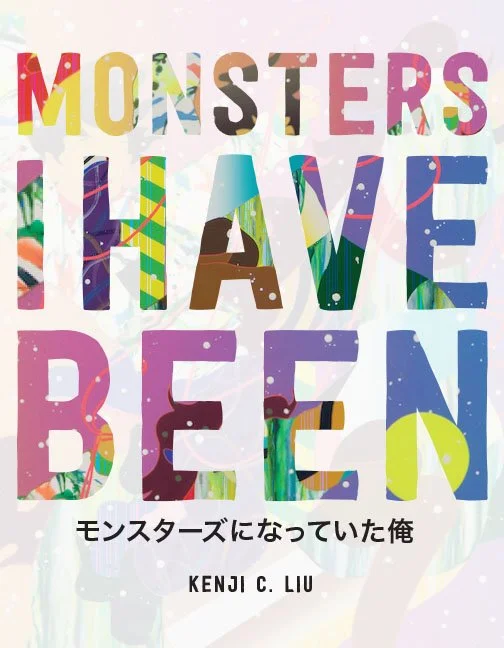
Monsters I Have Been
Alice James Books, 2019
Finalist, 2020 California Book Awards and Maine Literary Awards
Monsters I Have Been uses an invented method I call “frankenpo”—disassembling, remixing, and recombining existing texts—to investigate masculinity, violence, sexuality, race, and power. The collection asks how inherited forms of masculinity might be dismantled and remade through an equally disruptive approach to language.
“Liu relishes the absurd and the happenstance…”
—Publishers Weekly
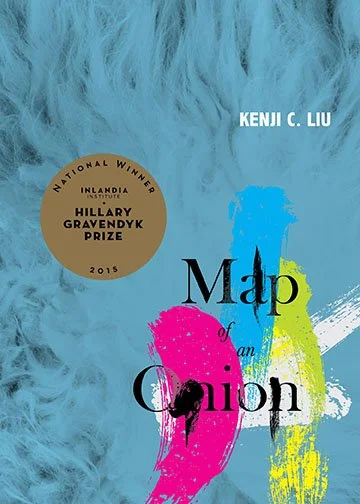
Map of an Onion
Inlandia Institute, 2016
Winner, 2015 Hillary Gravendyk Poetry Prize — National Prize
Map of an Onion explores identity through family history, migration, citizenship, language, race, gender, and nation. Moving between the personal and political, the collection examines the categories and histories through which identity is constructed and asks what might exist beyond them.
Chapbooks
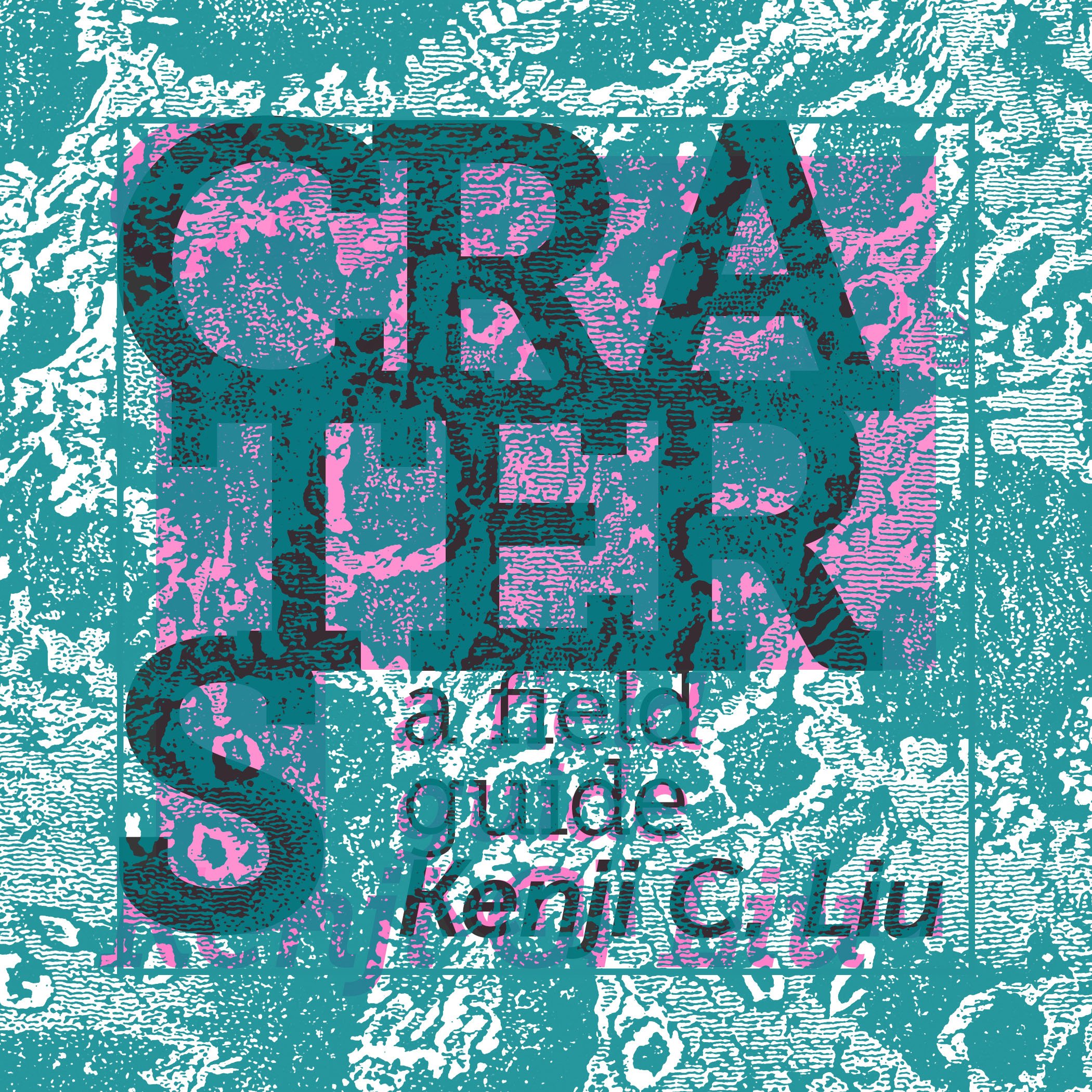
Craters: A Field Guide
Goodmorning Menagerie, 2017
You Left Without Your Shoes
Finishing Line Press, 2009
Frankenpo
In Monsters I Have Been, I developed a found-text practice I call frankenpo, constructing poems from language drawn from multiple source texts. Cutting, recombining, and recontextualizing existing language allows me to examine how ideas about race, gender, masculinity, power, and belonging are embedded in the texts and histories we inherit.
The process draws on collage, sampling, and archival research—methods that also continue through my visual art practice.
Selected conversations about frankenpo
Masculinity, Haunting, and the “Frankenpo” Process
The Adroit Journal
I’m Made of Other Bodies
Frontier Poetry
Ten Questions for Kenji C. Liu
Poets & Writers
Selected Reviews
Critical writing on Monsters I Have Been and Map of an Onion.
Review of Monsters I Have Been
Muriel Leung, The Georgia Review
“So Many Side-Eyes: Experiments of Resistance in Kenji C. Liu’s Monsters I Have Been”
Tupelo Quarterly
Review of Monsters I Have Been
D. M. O’Connor, RHINO Poetry
“Labor of We: Layers and Alliance in Kenji Liu’s Map of an Onion”
Rajiv Mohabir, Jacket2
“I’ll Look Behind You As You Arrive: Kenji C. Liu’s Map of an Onion”
Hyphen
Selected Interviews & Conversations
Conversations about poetry, collage, masculinity, cultural memory, politics, and the relationship between writing and other artistic practices.
Ten Questions for Kenji C. Liu
Poets & Writers
“I’m Made of Other Bodies”
Frontier Poetry
“Masculinity, Haunting, and the ‘Frankenpo’ Process”
The Adroit Journal
“Intersection of Poetry and Movements: An Interview with Author Kenji Liu”
TaiwaneseAmerican.org
“4 Contemporary Poets on Curiosity, Generosity, and Vulnerability”
Chicago Review of Books
In the Classroom & Scholarship
My writing has been taught in university literature and creative writing courses and cited in scholarship on gender, identity, trauma, and cultural representation.
The Promises of Monsters — ENGL 200: Reading Literary Forms
University of Washington
Monsters I Have Been was taught as a primary course text in a class examining monstrosity, colonialism, capitalism, racism, and xenophobia.
Between Poetry and Artistic Practices — Introduction to Poetry
Bellevue College
Monsters I Have Been was included in a course exploring poetry in relation to broader artistic practices.
Suture: Trauma and Trans Becoming
KJ Cerankowski, punctum books
Monsters I Have Been is cited in Cerankowski’s scholarly study of monstrosity, embodiment, trauma, and trans becoming.
Selected Publications
American Poetry Review, Academy of American Poets, Asian American Writers’ Workshop, Ecotone, Gulf Coast, Apogee, The Rumpus, Poetry Northwest, The Feminist Wire, The Progressive, ANMLY, and others.
Writing and Visual Art
Writing remains part of my broader artistic practice. Across poetry, archival research, painting, and public art, I return to questions of memory, migration, power, cultural inheritance, and the ways history is constructed and retold.
Methods that began in the writing—collage, found language, research, quotation, and recombination—continue through my visual work.
Explore Historical Paintings →
Explore Collections & Projects →